TLDR: Selling through email without being salesy comes down to two things: timing and tone.
Earn the trust first, then make a clean ask in your own voice. That’s the whole formula.
A while back I was reviewing a client’s email sequence and noticed something. The first six emails were warm, helpful, and genuinely good. Selling through email without being salesy was clearly not the problem. They had the voice down. But then email seven arrived and it felt like a completely different person had written it. Urgent subject line. Bold text everywhere. Three CTAs. A countdown timer screaming at me.
I asked them why the tone shifted so drastically. They said “because that’s what a sales email is supposed to look like.”
That’s the problem right there.
Most people treat the sales email like a mode switch. You go from “helpful content creator” to “person trying to close a deal.” The reader feels it immediately. It’s like a friend who calls you out of nowhere after months of silence and you just know before they even speak that they’re about to ask for something.

The email didn’t earn the ask. And the copy is overcompensating for that.
The good news is this is fixable. And it doesn’t require you to become a copywriter.
Think about how you actually recommend things to friends. You don’t send them a cold message saying “BUY THIS NOW, LIMITED TIME.” You’ve probably been talking about a problem for a while. You mention something that helped you. They’re already primed.
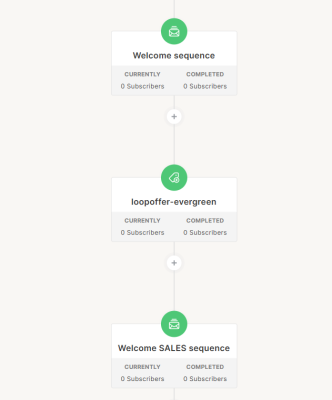
That’s what a good welcome sequence does. It talks about the problem your reader is dealing with. It gives them real, useful stuff. By the time email seven arrives, they already trust you. They’re already thinking “I need to do something about this.”
The offer isn’t a pivot. It’s the answer they’ve been waiting for.
If your offer email feels salesy, the most common reason isn’t the copy. It’s that you haven’t spent enough time on the problem before you introduced the solution. Go back and look at your sequence. Are you actually talking about the pain your reader is sitting with? Or are you jumping to tips and tactics before they’re warmed up?
Here’s a reframe that helps. Imagine you’re writing to one specific person. Someone you actually know who has the exact problem your product solves.
You wouldn’t say “Act now before this offer expires.” You’d say something like “I’ve been meaning to tell you about this. I think it could genuinely help with what you’re dealing with. Here’s the deal, and here’s how to get it.”
That’s it. That’s the email.
You’re not hiding the fact that you’re selling something. You’re just not making it weird. You trust that if you’ve been helpful and the offer is relevant, your reader will make up their own mind.
Write like someone who believes in what they’re selling, not like someone who’s afraid the reader will say no.
There are a few specific approaches that work really well here:
| Non-Salesy Approach | What It Looks Like | Why It Works |
|---|---|---|
| The “by the way” mention | Mention your product naturally inside a value email | Feels like a recommendation, not a pitch |
| The case study drop | Share a result a customer got, then link to the offer | Social proof does the selling for you |
| The P.S. sell | Keep the email helpful, add the offer in the postscript | Low pressure, easy to ignore if not relevant |
| The earned ask | Full offer email after a complete welcome sequence | Reader already trusts you, timing is right |
This is where a lot of people overcomplicate it.
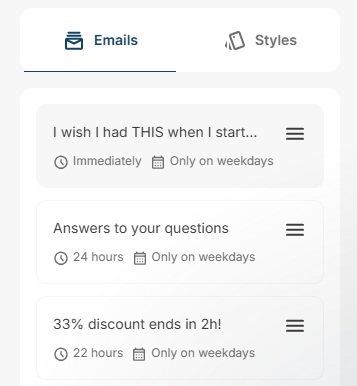
They add three CTAs because they’re not sure which one will convert. They repeat the offer in the P.S. They add a fake countdown timer that resets every time you open the email. (Subscribers notice, by the way. They always notice.)
Here’s a quick gut check before you hit send:
| Do This | Not This |
|---|---|
| One CTA, one link | Three buttons pointing to the same page |
| A real deadline per subscriber | A fake timer that resets on every open |
| Consistent tone throughout | Warm emails then a sudden “ACT NOW” gear shift |
| Mention the offer once, clearly | Repeat the pitch in the body, the P.S., and the subject |
| Subject line that sounds like you | Subject line that sounds like a Black Friday ad |
Keep it clean. One offer. One link. One deadline that’s actually real.
If you want genuine urgency without turning your copy into a used car ad, a personalized deadline does the job quietly. Tools like LoopOffer let you add an individual deadline for each subscriber based on when they joined your sequence. The timer in the email is real. Your copy doesn’t have to do any of the urgency heavy lifting. You can stay warm, stay helpful, and still create a real reason to act today.
The mechanics create the pressure. The copy creates the connection.
This is worth its own section because most people blow it right here before the email is even opened.
The subject line is the first signal your reader gets about whether this is going to feel salesy. Match the tone of your sequence and you’re already ahead of most.
| Salesy Subject Line | Non-Salesy Version |
|---|---|
| 🚨 LAST CHANCE: Offer Ends Tonight | “Quick thing before this closes” |
| LIMITED TIME: 40% Off Ends NOW | “I wanted to make sure you saw this” |
| Don’t miss out, final hours left | “Still thinking it over?” |
| You NEED to see this deal | “Something that might help with [problem]” |
The non-salesy versions don’t hide that there’s a deadline or an offer. They just sound like a person wrote them.
Most articles stop at the send button. But what about the people who didn’t buy?
First, don’t panic. Most subscribers who don’t convert on the first offer aren’t gone forever. They might not have been ready. They might have missed the email. They might need one more nudge.
A simple follow-up approach that doesn’t feel annoying: send one short email the day before the deadline closes. Don’t re-pitch the whole thing. Just acknowledge that time is running out and remind them what the offer is. One sentence. One link. Done.
If someone still doesn’t buy, that’s fine. Keep sending value. The relationship matters more than the conversion. Plenty of people buy on the second or third offer cycle once they’ve seen enough proof that you’re the real deal.
What you should never do is send four follow-up emails in 48 hours all screaming about the deadline. That’s how you train your list to unsubscribe.
Selling through email without being salesy isn’t really about the words you choose. It’s about genuinely believing that what you’re offering will help the person reading it.
If your offer email feels pushy, ask yourself: do I actually think this will help my reader right now? If the answer is yes, your job is just to explain that clearly and ask once, confidently. If the answer is no, that’s a different problem. No amount of copywriting fixes a mismatched offer.
Here’s the simplest version of all this: 3 to 7 value emails, then one clean offer email with one real deadline. Keep your tone consistent throughout. Make the ask confidently and don’t apologise for it. That’s the formula.
You don’t need to turn into a salesperson to sell.
Q: How many emails should I send before making an offer? A: There’s no magic number, but 5 to 7 emails of genuine value is a reasonable baseline for a welcome sequence. The goal is that by the time the offer arrives, your reader already trusts you and recognises the problem you’re solving. If you’ve done that in 3 emails, great. If it takes 10, that’s fine too.
Q: Should I use urgency in my offer emails? A: Yes, but it has to be real. Fake countdown timers that reset on every open have trained subscribers to ignore them. The better approach is a personalized deadline tied to when each subscriber joined your sequence, so the urgency is genuine for every individual reader. Tools like LoopOffer handle this without you needing to write a single pushy line.
Q: What’s the biggest mistake people make in sales emails? A: Switching tone. The offer email sounds completely different from the rest of the sequence and the reader feels the gear shift immediately. Keep your voice consistent throughout. An offer email should read like email six, not like a landing page.
Q: How do I sell without sounding desperate? A: Make one ask, confidently, and don’t repeat it three times in the same email. Desperation comes from overexplaining and over-asking. Trust that if you’ve built the relationship and the offer is relevant, you don’t need to convince anyone. You just need to tell them it exists.
Q: How many CTAs should a sales email have? A: One. Seriously. Multiple CTAs create confusion and signal that you’re not confident in the offer itself. Pick the single most important action you want your reader to take, link to it once, and leave it there. If they’re interested, one link is enough.
loopOffer enables you to create evergreen email offers with personalized deadlines & countdown timers.
Copyright © 2025 – All rights reserved
Made with 🍌 in 🇳🇱
Have questions? Drop us a line. At support@loopoffer.co